

Animals, Instinct, and the Quiet Wisdom of Taoist Flow

This morning, before the waking world had gathered its thoughts, I watched a squirrel dash along the fence line—quick, certain, utterly present. Every muscle a response, every leap a wordless expression of necessity. Animals move not from analysis but from a flow of knowing, shaped by millennia, guided by the unseen currents of Tao.
Listening for the Quiet Inside
How often do we pause to sense our own instincts? The ones that arrive before language and linger beyond logic. The Taoist way as seen in animals’ instincts shows that wisdom doesn’t always require language. Taoist thought invites us to observe—not to copy, but to listen. What arises in your body before the mind assembles its story? In the hush of noticing, can you feel some animal current in yourself, humming in the blood?
The Natural Flow Beyond Judgment
The heron stands for hours, still as a branch, then moves with a sudden sureness. Instinct yields neither apology nor pride. In Laozi’s view of natural flow, Taoist philosophy draws lessons from animals’ instincts—reminding us that this naturalness, or ziran, is a return to the uncarved block: not forced, not pretended. When we drift from our own nature, life quickly becomes effortful, tangled in self-critique. Animals simply return, again and again, to the flow of the present.
- Notice the urge to shift, to stretch, to breathe deeper
- Let your attention follow the animal movements of your body
- Ask softly: What is needed right now?
- Trust the moment’s quiet directive—without rush, without story
Taoist stories often praise the ox, the fish, the wild bird—not only for their simplicity, but for how they dwell within their movement. The world, to them, is neither an enemy nor an obstacle, but something to be met, shaped by, and inquired of in equal measure. Animals in Taoist thought often follow the seasonal cycles and natural rhythms celebrated in Eastern mindfulness—reminding us that there are always larger patterns moving just beneath the surface.
Breathing with the Wild
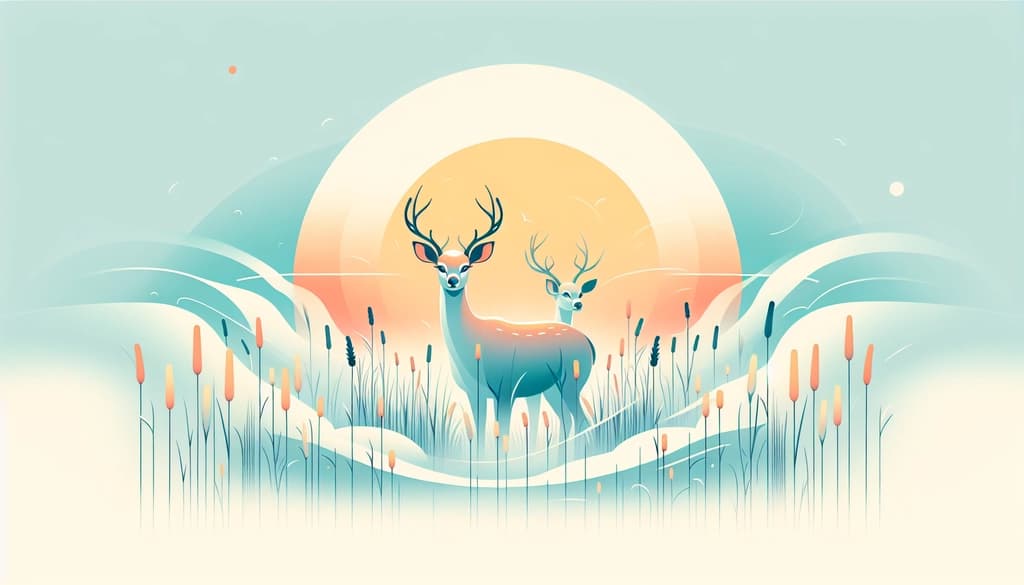
We are not separate from the instinctual or the wild, no matter how many doors or screens shield us from wind and soil. Instinctual flow in Taoist thought is embodied by animals, moving harmoniously with nature. Tao reminds us: what moves through the deer, the bird, the fox, moves too through us—sometimes as hunger, sometimes as longing, sometimes as the simple wish to rest or roam or touch what is real.
- The pulse in your palms
- How your breath responds to what you sense
- The way music or birdsong invites you to listen
- The upwelling of rest or motion from somewhere deeper than reason
Let your next breath be a soft permission. You do not have to 'figure it all out.' There are seasons, urges, and inner weather. As animals do, you can rest in what is here—return, begin again. If you’re curious how mindful flow carries into stillness, consider exploring nature’s influence in Zen and Taoist practices and notice how, even in quiet, instinct and presence remain.
“The great Tao flows everywhere, both to the left and to the right… It nourishes all things, and does not demand them. It accomplishes its task, but does not claim credit.” — Tao Te Ching
FAQ
You May Also Like

Taoist Non-Striving: Returning to Ease in a Busy Society
It can feel impossible to go slowly when the world pulls us forward. Yet Taoist non-striving whispers of another way—one where presence outweighs progress, and we remember our place within a much older rhythm.

Qi and Vitality: Finding Stillness and Flow in Taoist Energy
Some mornings, the body feels caught between ache and restlessness. Taoist practice invites us to sense qi—not as a force to master, but as the quiet pulse of life within and around us.

Taoist Wisdom and the Art of Flow in Mindfulness
Sometimes presence feels like water in the hand—here, then gone, shaped by the smallest tension. Taoist teachings invite us to return again and again to this gentle flow, where effort softens and the way forward becomes clear without striving.